Sport will recover from Covid-19 shock but time will tell just how many stitches it needs

Kevin Moore, Managing Director at Legacy Communications

Originally published in Sunday Independent and Independent.ie March 15 2020

Despite what the legendary Liverpool manager Bill Shankly once claimed, it is times like this when sport and all other forms of entertainment are firmly put into context. What originated as a virus strain in China in December has steadily spread and become a worldwide issue.

‘Football is not a matter of life and death, it’s much more important than that’ – Bill Shankly.

The past week has proved to be a seminal one, with the World Health Organisation declaring Covid-19 a global pandemic on Wednesday. Italy, one of the worst affected regions, saw its virus death toll surge by 30 per cent to more than 800 on the same day. US President Donald Trump quickly followed with the announcement that travel to and from the majority of Europe would be suspended.

It has also proved to be a seminal week in Ireland. On Monday the St Patrick’s Day Parade was cancelled. On Wednesday Ireland recorded its first Covid-19 related death and on Thursday the Irish government and medical leaders announced a series of stringent measures to try to control the spread of the virus. All schools, colleges and childcare centres are closed for at least two weeks and all indoor gatherings of more than 100 people and outdoor events involving more than 500 people are recommended to be cancelled.

All week, conversations, social media and traditional media platforms were dominated by Covid-19 and its impact from both a health and economic perspective. Sport was not long in entering the conversation. While Shankly was a little off the mark with his statement, the power of sport in society globally cannot be overstated.

Earlier in the week basketball superstar, LeBron James, claimed he would refuse to play if the Los Angeles Lakers games were held behind closed doors, a stance that he soon backed down from.’

It’s far too early to give a sense of the scale, but it is safe to say that Covid-19 will impact on all businesses and industries in some shape or form. Sport is responsible for most of society’s most regular and widespread mass gatherings and it looks like 2020 will be a year that packs a punch to its bottom line.

Now believed to have surpassed the $500 billion mark, sport is one of the fastest growing industries globally. It will survive, it will recover, but time will tell just how many stitches it needs.

The epidemic threw Chinese sport into disarray at the turn of the year and as it stands, most football leagues around Asia have been postponed indefinitely. Images of Ronaldo celebrating with his teammates in an empty stadium last week as Juventus beat Inter Milan revealed the stark reality of what was to follow in Italy and across Europe.

A study conducted by Calcio e Finanza’, an Italian website specialised in soccer finance, estimates that playing behind closed doors would result in a loss in the region of $34m (€30.5m).

Earlier in the week basketball superstar, LeBron James, claimed he would refuse to play if the Los Angeles Lakers games were held behind closed doors, a stance that he soon backed down from as the gravity of the situation heightened.

Talk of empty stadia and closed doors have now turned to postponements of matches, leagues, and competitions across a host of sports globally. The UK’s biggest racing festival in Cheltenham, however, did not seem to get the memo and averaged almost 60,000 attendance per day. As each day of the Festival passed, the decision to open the doors seemed more and more irresponsible.

Football’s richest league, the Premier League, generates over 70 per cent more revenue than its nearest competitor, the Bundesliga. So, it may not be a surprise that they stalled in adopting an empty stadium policy. On Friday an emergency club meeting was held in the wake of both Arsenal head coach Mikel Arteta and Chelsea player Callum Hudson-Odoi testing positive for Covid-19. The decision was made to suspend Premier League fixtures until April 3, while next week’s Champions League and draw have been postponed.

Ireland faced its first significant virus-related economic hit when its Six Nations match against Italy on March 7 was called off, resulting in a financial blow for the IRFU, the Aviva Stadium and the Irish economy. Most key sporting fixtures in Ireland took place over the past couple of weeks as authorities monitored the situation.

On Wednesday, Basketball Ireland took what could have been perceived as a rash decision to suspend all basketball related activity until further notice due to the virus. In reality though, they were one step ahead as 24 hours later all major sporting authorities in Ireland began to follow suit. The Allianz GAA Leagues, the Guinness Pro14 amongst others . . . all postponed.

The financial impact of the fanless matches and postponements is significant. Like most businesses trying to cope with Covid-19, it will hurt. Loss of income through gate receipts, loss of tv revenue and loss of opportunity for sponsors.

The wider loss of income to the Irish economy from packed stadia in March and April is a big blow. The Italy v Ireland fixture and the Pro14 derby between Leinster and Munster along with the Allianz League football and hurling finals, for example, would run into the tens of millions combined.

It’s not the first time in the sporting world that unforeseen events have thrown sport into disarray and it won’t be the last. Natural disasters as recent as the bush fires in Australia last year and an earthquake in Japan in 2016 resulted in the cancellation of sporting fixtures and with it millions of dollars worth of income. The SARS outbreak in China in 2003 led to the Women’s World Cup being moved to the US. Closer to home, the foot and mouth outbreak played havoc with the Irish economy and sporting fixtures in 2001.

However, this scale of sports disruption across the world has not been seen since World War II. As an industry, sport is well equipped to deal with any short-term pain. Short-term means events are postponed rather than cancelled. Revenue is delayed rather than lost. Leagues and annual competitions will adjust. Sponsors will find innovative ways to respond. Fans will attend and watch sport as soon as it returns.

It is the larger global events that are more complex. UEFA took an innovative step to spread this year’s European Championships across the continent, hosting the event in 12 countries, including Ireland. This plan to spread the tournament throughout Europe has collided with the spread of Coronavirus. The championships now look set to be postponed until 2021, according to L’Equipe. As one of the host nations, Ireland will have to deal with the fall-out of such a postponement and with it the financial and tourism repercussions.

One question on many sports fans’ minds is around the biggest event of them all, the Olympics, set to be staged in Japan in late July. Cancelling the Olympics is unthinkable. As it stands, time is on its side.

The more action that is taken now by governments and sports authorities around the world, the greater chance there is of curtailing the spread and therefore limiting the pain.

How the rise of social fundraising led to over $200 million in donations for Australia

Amy Hacon, Account Manager at Legacy Communications

Originally published in Marketing.ie Magazine, March 2020 Issue

We now live in a world where one misused word can result in a life sentence. A world where people are tiptoeing around each other and praying something isn’t taken out of context and becomes the next big viral hit. But what if all this social pressure and power of persuasion was actually used for good?

Apparently unthinkable things can be achieved, unthinkable in the form of over AU$200 million and counting, all for the good of the planet.

We’ve all heard about the devastating bushfires in Australia that have reportedly killed over a billion animals, claimed 28 lives, destroyed 3,000 homes, burned through 25million acres of land and left people distraught and helpless. Fires that have been out of control since July 2019, yet five months later are only just beginning to get some substantial support. Why? Because people started to put the social pressure on.

Australian comedian, Celeste Barber, noticed some of the country’s richest weren’t among the early donors, so she took to Twitter sharing a link to her fundraiser for the NSW Rural Fire Service (RFS), urging the top 0.01% to participate.

“Hey billionaires, Notre Dame burning down sucked. I get it. Times that by a trillion and that’s what’s happening in Australia”. “Feel free to flick us a quick couple of million. You make it seem pretty easy.”

The tweet went viral and her fundraiser for the NSW RFS has become the largest Facebook fundraiser to date, with an ever-increasing AU$51 million (€31.7 million) in donations from people across the world. The fundraiser has helped raise much needed funds and helped prompt businesses, celebrities and upper class to make a contribution resulting in a total of more than AU$200 million donated to bushfire fundraisers.

The true power of social media? Or the true power of social pressures?

In Dublin, businesses and influencers got on board to help the cause after seeing all the devastation through social media. Sustainable Fashion Dublin hosted an event with clothes donated by well-known Irish influencers with all profits going towards the Australian bushfires. The event raised €4,340 and received a huge traction and kudos on social channels.

On a global scale, both indigenous and international businesses have become part of the social media fundraising conversation. Australian brand, Bondi Sands, donated $100K to the cause and announced they will be selling reusable cups and bottles with 100% of proceeds donated to the Red Cross to support bushfire relief.

As social media has become a key outlet for people and businesses to have their stories, opinions or messages heard it’s also become a successful platform for fundraisers to gain maximum targeted reach with minimal effort. As a Kiwi living in Ireland and seeing the devastation in Australia, it really hits home. A social fundraiser helps eliminate the challenge of distance and enables anyone to make a contribution and feel more connected to the cause.

In Ireland, social fundraising has taken off beyond expectations. Before Christmas we saw Irish influencer, Rosie Connolly, raise an impressive €287,636 for Irish Children’s Hospitals all through a simple incentive fundraiser. Anyone who donated €5 went in the draw to win an original Gucci bag.

With more fundraisers popping up each day, is this just the latest social ‘bandwagon’ or are we actually seeing a societal shift of people being more generous towards these much-needed causes? Could the Gen Z influence on ‘doing good for the planet’ be encouraging us all to be more giving?

Facebook were ahead of the curve recognising this social fundraiser opportunity by introducing its own fundraising dedicated tools five years ago. According to the Sept 2019 figures report from Social Media Today, users have collectively raised over US$2 billion for a variety of causes through the platform tools. A staggering US$1 billion of that total has been raised simply through birthday fundraisers.

To further leverage this need for social donations, Facebook recently announced its fundraising stickers for Instagram Stories will soon be expanded from the US to Europe. With Instagram users being digitally savvy and socially aware this launch could be a major gamechanger for brands and non-profits in Ireland.

As the scale and quantity of fundraisers start dominating people’s social feeds it sparks questions around whether people are still donating for the good of the cause or if social pressure is becoming too much and people simply want ‘to be seen doing good’?

The results speak for themselves, with more funds being raised for causes than ever before, maybe these public social pressures are actually a positive move that we desperately needed to give hope during desperate times.

Social pressures or social good – it’s anyone’s call, but either way it’s making a significant impact across the globe.

Where Are You When You’re Needed Most?

Claire O’Grady Director of Strategy + Innovation at Legacy Communications

While seismic changes are happening, brands shouldn’t just go dark. Find your lane + keep communicating

COVID-19 rules the world right now. We’re in the throes of something seismic, that may change us for good.

We’ve lost jobs; our movement is restricted; we can’t hug our loved ones; our mental health is suffering and we’re fighting a war.

This is not only a global crisis but a personal crisis. But why have some of our most loved brands stopped talking to us in our time of need while others have found the perfect words? If you want to be a brand that’s in it for the long run don’t go dark and abandon your consumer. While this crisis is temporary, it’s real. Don’t think about today, think about how you want to be perceived in the long run. You can’t just be there for the good times.

So how do brands communicate?

By applying simple consumer mindset thinking a brand can build a meaningful connection during a crisis. With some basic crisis psychology, a good understanding of your consumer and how you anticipate they will react to crisis mode you’re unlikely to go wrong.

Rules of Play:

Don’t be afraid to show up

Never leave anyone in their time of need – their memory is long. Don’t give up communicating “until this is all over”. Now is not the time to say nothing.

Take a good look at yourself

Specifically, your existing campaigns – do they make sense? Hotels.com repurposed their latest creative campaign which had their central character Captain Obvious enjoying a luxury break to Captain Obvious using hand sanitiser and practicing social distancing and advising everyone else to do the same. Magic.

Focus on the right stuff – Do Good; Don’t Look Good

The balance of communicating while not appearing to profiteer is a fine one but it’s key to put profit motivations on the back burner. Focus on how you can help. New Balance have moved from making sneakers to making protective equipment, others are offering their fleets for vital local pharmacy deliveries; supermarkets like Dunnes Stores and Supervalu have made times instore for the most vulnerable in the community and Glenisk are asking their social community to nominate small Irish businesses they will buy vouchers from.

How you act at home matters

Treat your employees with as much care and kindness as your customers. They will talk, customers will listen. Quantas CEO Alan Joyce has forgone his salary for the next few months to help drive the business, true leadership living the brand values of ‘Spirit of Australia’. In contrast Amazon CEO Jeff Bezos, the world’s richest man asked the public to donate to an Amazon employee relief fund.

Use your platforms for good

Some brands are nailing this, including Coca Cola giving their OOH space in Times Square to remind people to social distance or Nike encouraging everyone to #playinside.

Admit you don’t know

Brands who are manoeuvring through this period honestly and showing vulnerability are winning out. Admit when you don’t know what the latest announcement will mean for you or how you’re going to tackle it. Everyone feels the same.

Don’t talk about yourself

Now is not the time to push product attributes unless they have a relevant benefit – Dettol have every right to keep talking about the antibacterial qualities of their products and are sharing valuable information to their community but talking about the laces on your luxury shoe brand is not for now.

Don’t act like it’s business as usual

Acknowledge what’s going on or run the risk of building a real disconnect with your customer. Case in point is the brand appreciation Vogue Italia is experiencing. For the first time ever, the iconic brand is turning its cover white- when it could have told itself that their audience needed fashion beautiful images – “White is, first and foremost, respect. White is rebirth, light after the darkness, the sum of all the colours. White is the uniforms of those who have saved lives while risking their own. It’s time and space for thinking. And for staying silent too. White is for people who are filling this time and space with ideas, thoughts, stories, verses, music and kindness to others,” said Vogue Italia editor in chief Emanuele Farnetti “It’s a reminder that after the crisis in 1929, clothes turned white, a color chosen to express purity in the present and hope for the future. And above all, white is not surrender; it’s a blank page to be filled, the frontispiece of a new story about to begin.”

If that doesn’t build an emotional connection, nothing will.

Legacy X LEON: Naturally Fast Communications

Launching LEON, the Naturally Fast Food brand, into the Irish market

In 2018, The Irish Times ran their first ever sustainability survey and though they found numerous positive results, one of the key areas they found lacking was the fast food sector, citing the industry as a “black spot” on the Irish sustainable journey. LEON, the Naturally Fast Food brand, were set to launch in the Irish market less than six months after these results were published and the conversation around sustainability was only one challenge they would face in the Irish market.

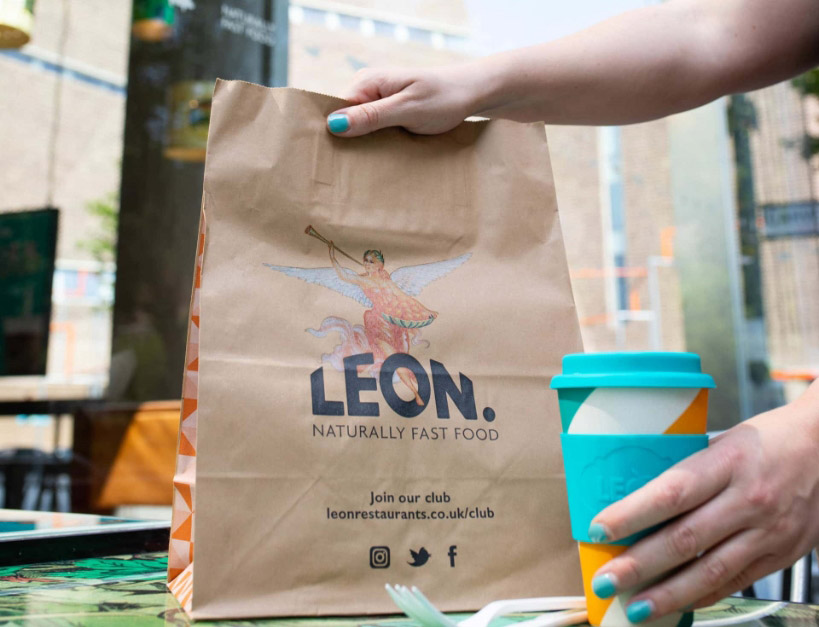
The concept of fast food not only summons up the idea of unsustainability, but also an unhealthy diet made from unnatural, processed food. Waterford native, Stuart Fitzgerald, MD of LEON Ireland was determined to shatter these preconceptions around the fast food industry and show that LEON could offer fast, healthy options and do it in a sustainable way. Legacy Communications worked with the LEON Ireland team to create a PR strategy that highlighted the point of difference the brand would offer Irish food fans.

The Legacy plan for LEON included educational press stories that had mass appeal, engaging with targeted influencers to produce authentic testimonials and creating on-brand content ahead of a “big bang” launch event.

To launch the brand into the public’s awareness, Legacy highlighted the generation of 600 jobs in the Irish market, some team profiling and emphasised the free food launch event to create media buzz. Legacy generated approximately 100 traditional media mentions during the campaign across print, online and broadcast media including key national targets such as RTE Six One News.

Ipsos MRBI’s annual Trust in the Professions Survey found that, in Ireland, only 10pc of people trust influencers. Legacy were sure to only engage influencers who would value LEON’s sustainability efforts and appreciate their offering of vegan, vegetarian and gluten free menu options. Legacy created an influencer Health Check to identify the best targets. Legacy apply this eight-step vetting system to potential influencer partners for brands to ensure credibility, brand and audience relevancy and trustworthiness before working together.

Legacy and the LEON team brought the targeted bloggers and media on a FAM Trip to London to experience the LEON menu ahead of launch, meet the UK team and explore the LEON HQ wellness space, The Kwoon. The FAM Trip guests were also brought to Kemble House for a food styling and photography session with the LEON cookbooks author, Rebecca Seal. The trip was a resounding success with the FAM Trip guests producing social content reaching over 224,000 people and increasing the Irish appetite for LEON.

Ahead of launch, Legacy wanted to create a fun, shareable video that conveyed key LEON brand messaging. The concept of “LEON” arriving in Dublin and not being able to find anywhere for a fast, healthy meal, created native content for the brand to share and Legacy secured video coverage on key online platforms such as Totally Dublin, Spin 103.8 online and more.

Just ahead of the launch, Legacy did some matchmaking and sent “You’ve matched with LEON” Tinder style invitations to key influencers. Each invitee received a LEON Legend Card, allowing them a sneak peek at the restaurant and exclusive benefits, this activity generated another burst of social content reaching over 220,000 people ahead of launch.

The final activity pre-launch seen a swarm of LEON characters take to Dublin’s streets and engage with the public, inviting them to the launch and educating them about the sustainable and natural food offering available at LEON.

According to The Irish Examiner, meal delivery platform Just Eat, which operates in 15 countries, reported a 987% rise in demand for plant-based options in 2017 in the UK, with one-third of its restaurant partners providing vegan options. With many Irish consumers similarly following vegetarian and natural food trends, the team at LEON identified the perfect commercial opportunity to enter the Irish market in 2019. When LEON launched in Temple Bar, over a hundred people queued for a taste of LEON’s Naturally Fast Food, as a result of the communications strategy devised by Legacy, which focused on changing attitudes and consumer education. With 19 more restaurants to come, Legacy plan to continue building a loyal customer base for LEON through informative and innovative communication strategies.

by Anthony O’Brien, Senior Account Manager